How Gentle Support Helps Your Body Release Tension Naturally
Muscle tension isn’t always caused by stress.
Often, it’s caused by effort.
Effort to sit upright.
Effort to maintain posture.
Effort to hold your spine steady for hours at a desk or on the couch.
By the end of the day, many people feel physically tired, but not fully relaxed. Even when lying down, their muscles may still feel tight.
If you’re wondering how to release tension naturally, the answer may not be stretching more or trying harder to relax.
It may be support.
Why Your Body Holds Tension Throughout the Day
Your muscles respond to demand.
If something needs stabilizing, they stabilize it.
When you sit without proper posture support, your spinal muscles subtly engage.
When your neck isn’t supported, small stabilizing muscles remain active.
When your hips aren’t level, surrounding muscles compensate.
These small adjustments continue for hours. Over time, that low-level muscular effort becomes chronic body tension.
The body only fully relaxes when it no longer has work to do.
Why “Just Relax” Doesn’t Relieve Muscle Tension
Many people try to consciously relax tight muscles:
“Drop your shoulders.”
“Unclench your jaw.”
“Let go.”
It may help temporarily. Then the tension returns.
That’s because muscle tension relief is not only mental, it’s structural.
If your body still needs to stabilize itself, muscles will re-engage. You cannot will your muscles to relax if they’re compensating for lack of support.
Gentle structural support reduces the need for compensation.
When the body feels supported, muscles don’t have to work as hard.
How Gentle Support Helps Reduce Body Tension
Gentle support is not rigid posture correction.
It’s not forcing your spine into a perfect shape.
Instead, gentle support means:
-
Your lower back feels supported instead of strained.
-
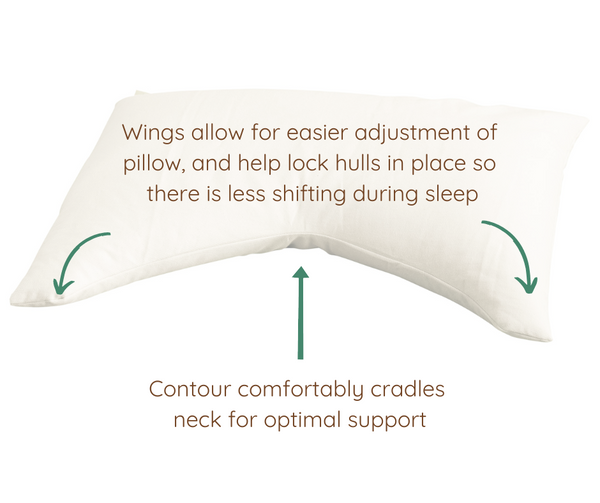
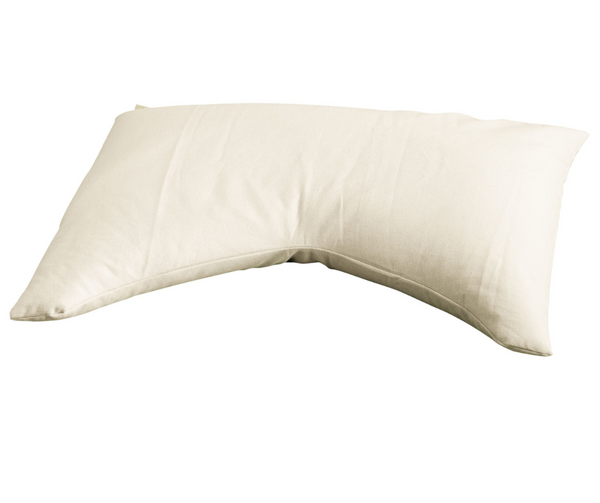
Your neck is cradled rather than propped forward.
-
Your hips feel balanced.
-
Your muscles are not bracing to hold position.
This kind of support can help reduce body tension naturally because it decreases muscular workload.
Support allows your body to rest in its natural alignment without constant effort.
This matters during the day and especially at night.
Releasing Tension at Night: Why Support Affects Sleep
If your muscles have been working all day, they may struggle to fully release when you lie down.
Without proper back or neck support at night:
-
The spine may remain slightly unsupported.
-
Stabilizing muscles may stay engaged.
-
The body may never fully settle.
This is one reason people wake up feeling stiff or tight.
When you provide adequate support — through proper positioning, balanced alignment, and stable surfaces — the body can finally stop compensating.
That’s when true muscle relaxation can begin.
The Nervous System and Natural Tension Relief
Muscle tension is not only mechanical, it’s neurological.
Your nervous system constantly scans for stability and safety. When the body feels unstable, muscle tone increases slightly as a protective response.
But when the body feels supported and secure:
-
Breathing deepens.
-
Muscle tone decreases.
-
The nervous system shifts toward relaxation.
This is why gentle support for back pain or posture issues can influence nervous system relaxation as well.
Warmth, consistent positioning, and structural support send subtle signals of safety to the body.
And when the nervous system feels safe, muscles soften.
A Simple Way to Help Your Body Relax Tight Muscles
Tonight, try this:
Lie down as you normally would.
Without trying to “relax,” simply notice:
-
Does your neck feel fully supported?
-
Is your lower back hovering away from the surface?
-
Are your shoulders slightly lifted?
Instead of forcing relaxation, adjust support.
Add a pillow under your knees.
Support behind the lower back.
Better cradling under the neck.
Then allow your muscles to respond naturally.
Often, when effort decreases, tension follows.
Gentle Support Is Not Correction — It’s Permission to Release
Your body doesn’t need forcing.
It needs fewer reasons to brace.
Gentle support helps reduce muscular workload. And when muscles stop working unnecessarily, natural tension relief becomes possible.
Sometimes, releasing tension isn’t about stretching more or doing more.
It’s about being supported better.